New law puts West Oakland coal project in limbo
on October 2, 2026
A massive proposed coal export terminal in West Oakland will now face a full environmental review before it can move forward, after Gov. Gavin Newsom signed a new state law Wednesday.
The Community-First Coal Review Act could delay plans to begin operating the terminal in 2028 and gives regulators another opportunity to examine the health and environmental risks of storing and shipping up to 20 billion pounds of coal annually through Oakland.
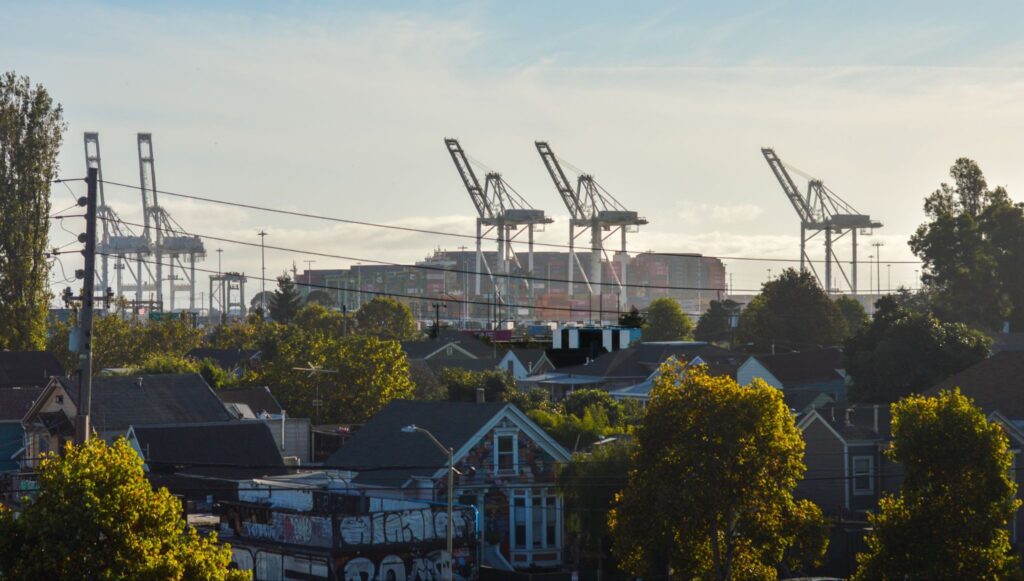
If built, the West Gateway Project, at the foot of the San Francisco Bay Bridge, would become a linchpin for coal transit from Utah mines for use across the Pacific in Asia. The project is headed by the Oakland Bulk and Oversized Terminal, Insight Terminal Solutions and local developer Phil Tagami.
In June, OBOT made national headlines after the Trump administration committed $75 million to the project, as part of a federal $700 million investment across the U.S. to promote coal consumption and production.
Assemblymember Mia Bonta introduced the Assembly bill 40, the Community-First Coal Review Act, which invokes the California Environmental Quality Act and requires agencies in charge of project approval to prepare an Environmental Impact Report for facilities that handle, store and export more than 10 billion pounds of coal a year.
The law will require developers to mitigate or prevent environmental harms associated with such projects, prior to approval from its lead agency. It will trigger an extensive process for drafting a report, periods for public comment and subsequent reviews, which may result in project delays.
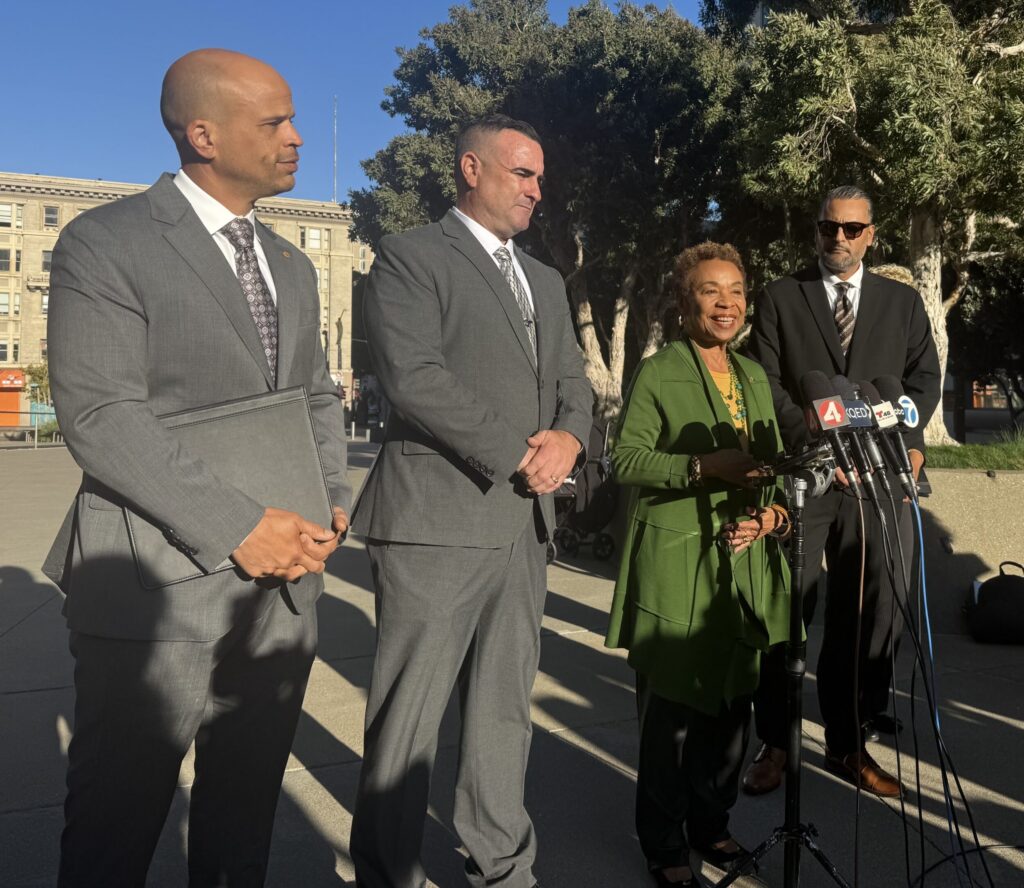
“By signing AB 40, California makes it non-negotiable: if Donald Trump wants to send new coal into our communities, we get an honest, current, science-based look at what it will do to our air and our health,” Bonta said in a news release.
Since 2015, Oaklnd residents have opposed the proposed coal terminal in West Oakland because of its potential environmental and health risks.
They said said that the project would affect the health of people in West Oakland who already are dealing with industrial pollution from sources such as warehouses, a recycling plant and a cereal factory, as well as diesel trucks going through residential areas to the Port of Oakland. Others expressed concern about exposure to fugitive dust, or tiny airborne particles, from open-air stockpiles next to a windy waterfront.
Many of them said these facilities were a by-product of discriminatory zoning and redlining policies, which largely impact Black and brown communities.
Margaret Gordon, a West Oakland resident and co-founder of the West Oakland Environmental Indicators Project, said in testimony at the California State Assembly that the coal terminal will add to cumulative impacts that will harm future generations.
“I have 17 grandchildren and a great-granddaughter,” Gordon said in the meeting. “I want them to have the resiliency and the skills to deal with all these issues in the future, because it’s not going to go away. I’m just hoping that through this EIR, you all see our plight of constant issues and concerns that come back.”
Opponents of the law say it unfairly targets OBOT and opens a legal precedent that may send bad signals to investors.
Horacio Gonzalez, who represents the California Business Roundtable, said at the Assembly that the bill may deter investment in the state’s “good movements ecosystem” – a part of port operations that facilitates the buying and selling of goods between markets.
OBOT has gone through a robust CEQA process, Gonzalez said in his testimony. and “obtained all the relevant approvals.”
Colin O’Brien, senior attorney at the nonprofit environmental law organization Earthjustice, said the project has not been subject to detailed evaluation. He added that an EIR will create more opportunities for scrutiny through public comment periods, which could push agencies and developers to implement more robust mitigation plans.
He, alongside other supporters of the law, many of whom are members of the “No Coal in Oakland” coalition, said the project still needs to complete extensive permitting: around 76 permits across 20 different agencies.
They also said the full extent of environmental risks from coal operations was not included in the project’s initial EIR.
A 200-page feasibility study released in July sheds some light on plans for OBOT’s latest development, which organizations said underscores the need for clearer mitigation plans.
The study was commissioned by the Rural Utah Infrastructure Coalition — a group promoting public investment in terminals for Utah’s coal exports. According to the plans, coal storage for West Gateway would be “provided by two open-air bunkers,” which would hold more than 60 million pounds of coal stockpiles.
The report also shows that OBOT can accommodate 116 car-unit trains. Each unit is comprised of 58 cars and 29 car segments — or joint cars. Each unit train has the capacity to carry some 27 million pounds of coal.
Ted Franklin, a co-founder of the “No Coal in Oakland” coalition, questioned the utility of coal operations for Oakland communities.
“California has very little coal consumption,” Franklin said. “Those coal companies in Utah? This project is for their private benefit.”
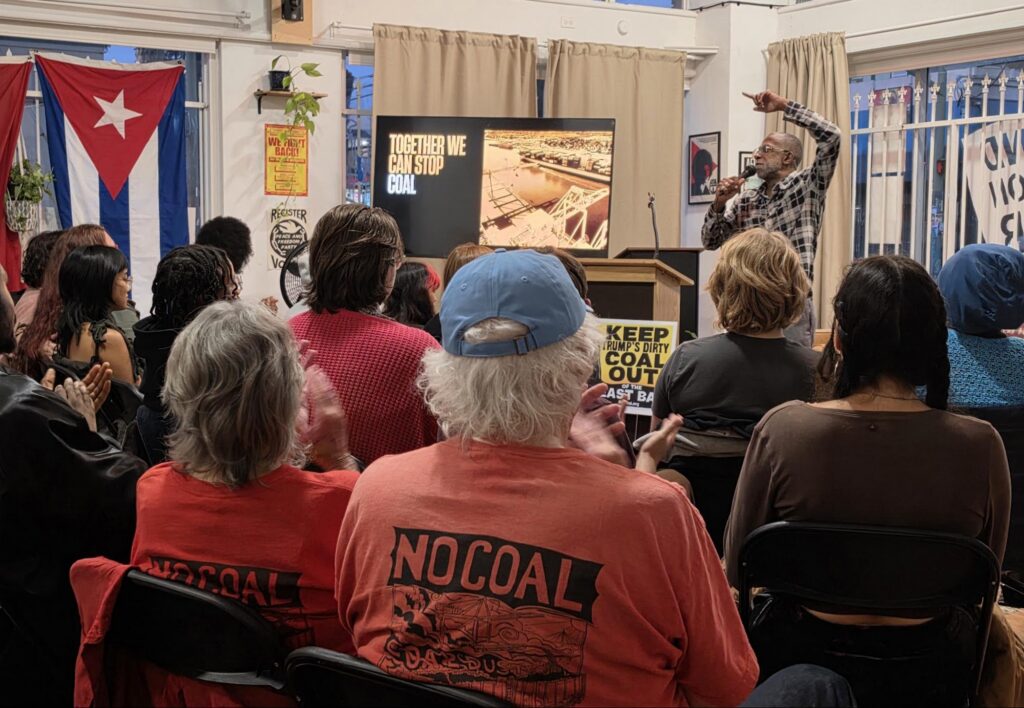
(Top Photo: An organizing meeting for “Together We Can Stop Coal in Oakland”at the Oakland Liberation Center in Fruitvale on Sept. 28)
In West Oakland, community-rooted care offers Black mothers support
Oakland North welcomes comments from our readers, but we ask users to keep all discussion civil and on-topic. Comments post automatically without review from our staff, but we reserve the right to delete material that is libelous, a personal attack, or spam. We request that commenters consistently use the same login name. Comments from the same user posted under multiple aliases may be deleted. Oakland North assumes no liability for comments posted to the site and no endorsement is implied; commenters are solely responsible for their own content.