
Incarceration

As activists and residents lined up to make dozens of complaints Tuesday, city leaders promised to schedule a review of Oakland’s gang injunctions. About 60 of people showed up at the city’s public safety committee meeting, many with signs that read “Stop the injunctions now” in English and Spanish. “We are here to ask Oakland to re-prioritize its efforts,” said Aurra Lopez, who called the gang injunctions “ineffective and actually counter-productive.”
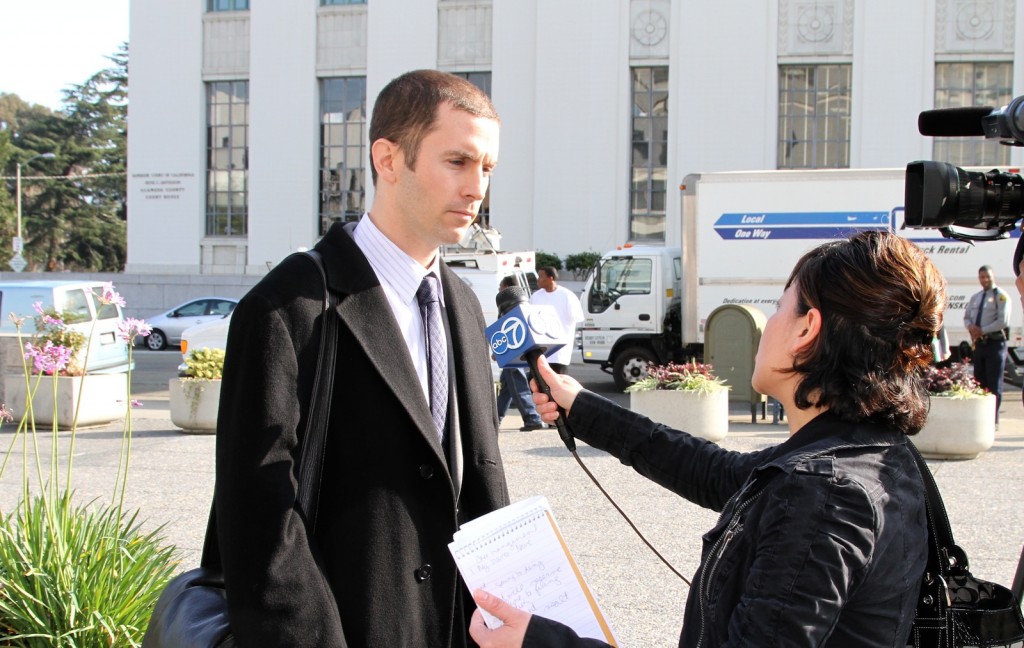
An Alameda County judge decided Friday to put off a decision about whether attorneys from Oakland law firm Siegel and Yee can represent a man who was named on a pending gang injunction. Lawyers from the Oakland City Attorney’s Office had brought up concerns regarding a conflict of interest within the law firm, where City Councilmember Jane Brunner practices, arguing that Brunner’s role in the firm could expose Siegel and Yee lawyers to the city’s confidential information.
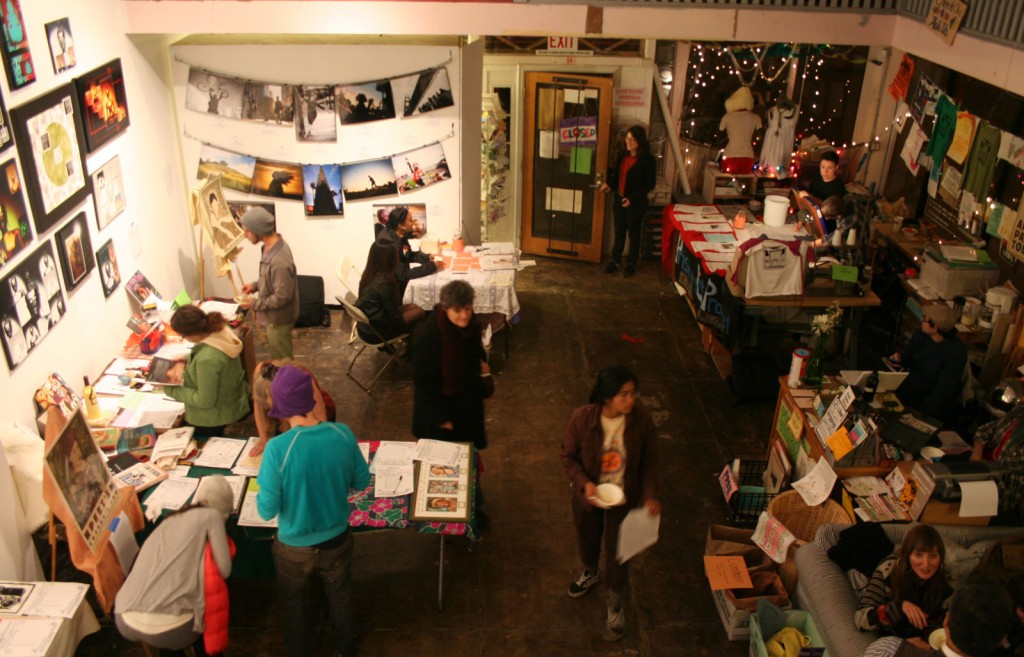
Each year, 24,000 novels, dictionaries and books of poetry are packaged and shipped around the country by volunteers of the Berkeley-based Prisoners Literature Project. For nearly 30 years, the volunteer-run organization has provided books to prisoners in an effort to nurture rehabilitation and encourage education among this sometimes-forgotten population of society.

On Thursday afternoon, the announcement that court hearings regarding the proposed Fruitvale gang injunction would be delayed did not stop approximately 30 demonstrators outside the office of the Alameda County Administrator from demanding an alternative measure to reduce gang violence in their neighborhoods.

Bike bells chimed as voices shouted “Bike for justice!” on the streets of Oakland’s Fruitvale and San Antonio neighborhoods late Tuesday evening. A group of 30 community activists toured the streets—lined with taco stands, vedura y fruta mercados, liquor stores and auto body shops—calling people inside stores and at bus stops to join them in opposing what could be the city’s second gang injunction.
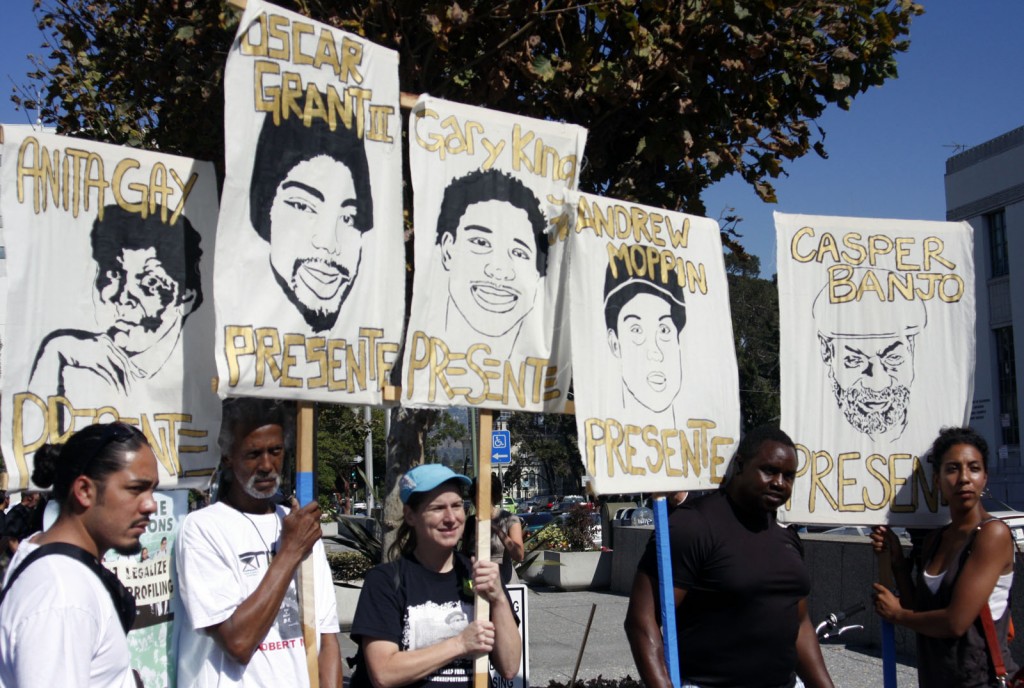
A short hearing on the status of North Oakland’s gang injunction this Thursday served as a backdrop for protest and legal maneuvering by groups opposed to the city’s newest tactic for curbing violence.

When James Smith was released on parole in 2007, the Department of Corrections gave him $200 and pointed him out the door—he had no support, nowhere to go, nothing but the clothes on his back. It had been years since he had been on the outside. In a matter of months, Smith was asking his parole officer whether he could be sent back to prison rather than finish parole. Without a job, life outside proved to be difficult—too uncertain. “I couldn’t find a job,” said the 45-year-old Oakland native. “It’s like being a pariah.”

City officials announced Wednesday that an injunction is being sought against 42 alleged Norteño gang members in Oakland’s Fruitvale neighborhood, the second such action this year to fight the city’s gang problem. If approved, the injunction would allow police officers more rein in arresting the named gang members for engaging in activities—mostly illegal already—considered consistent with gang behavior.
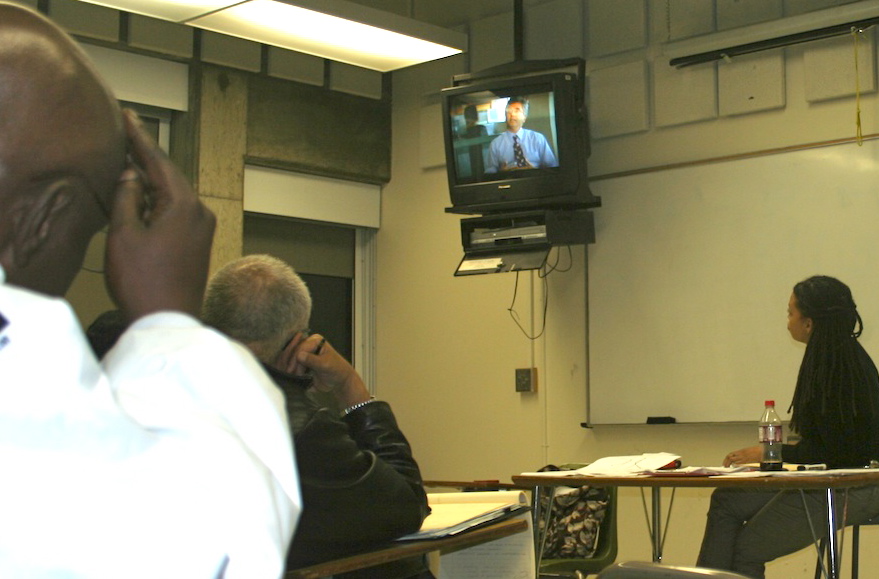
A twenty-minute documentary, produced by the North Oakland-based Ella Baker Center for Human Rights, examines failures in the California juvenile justice system and explores alternative methods in juvenile rehabilitation being used across the country