
‘Long live Lyle’: Vigil honors Bay Area activist killed in the Philippines
on May 5, 2026
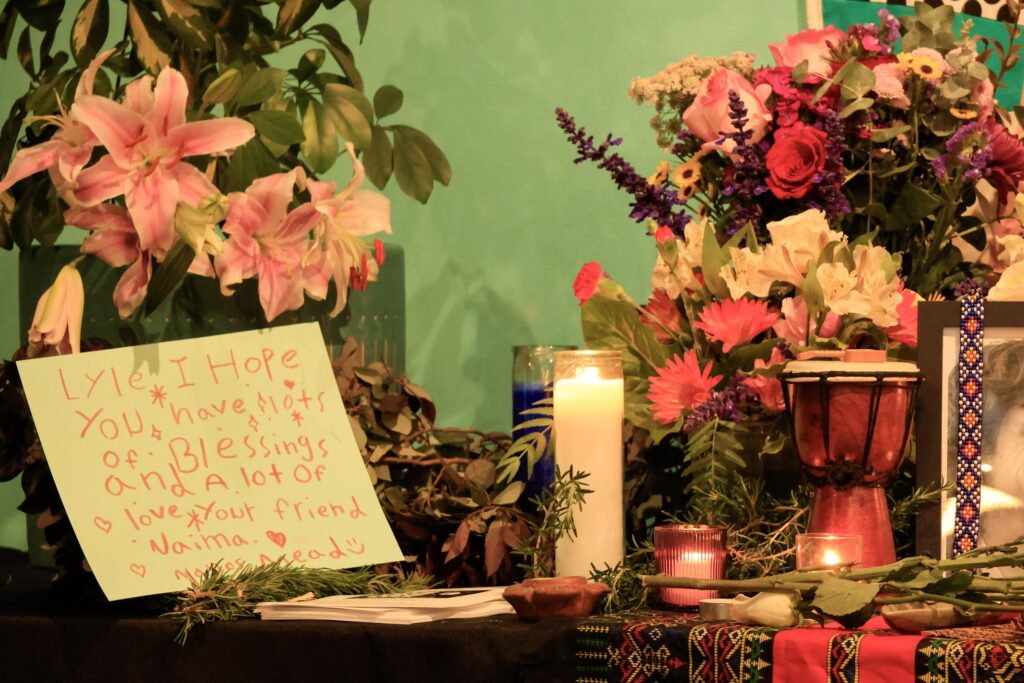
On a table against the back wall of Understory Filipino restaurant in Fruitvale, some mourners left a trinket, others a note, a candle or flowers to honor the memory of Bay Area activist Lyle Prijoles, who was killed by the Philippines Armed Forces last month.
Prijoles’ photo sat atop the table with those of five others who were gunned down on April 19 in Toboso, Negros Occidental, a remote farming village. The Armed Forces killed 19 that day and people all over the world have come to refer to the victims as the “Negros 19.”
“Lyle I Hope you have lots of Blessings and A lot of love. Your friend, Naima,” read a card written in red marker on the tribute table.

Over 100 people attended the Monday night vigil to support Prijoles and the Negros 19. “Mabuhay Lyle!” they chanted in Tagalog, with fists raised. (“Long live, Lyle.”) The vigil was held on May 4 because that is Star Wars Day, and Prijoles, 40, was a big fan. The Star Wars android BB-8 had a prominent spot on the tribute table, right in front of his photo.
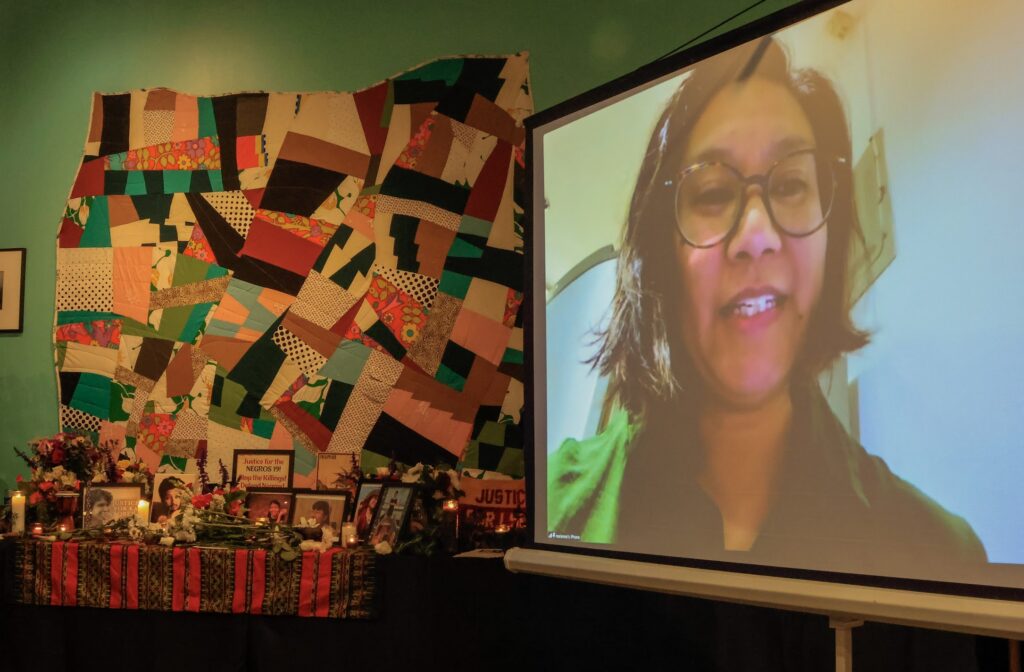
Prijoles’ partner, Marienne Cuison, addressed the crowd from the Philippines via Zoom, her face projected onto a large screen. She is working to return the remains of Prijoles and Kai Dana-Rene Sorem, the other U.S. citizen who was killed that day.
“Our love was born out of our commitment to serving the people, and yesterday, I had the honor of picking out his last outfit,” she said, through tears. “I did it with pride, because I know he died a hero and forever will be a son of Negros. I love you, my love.”
Cuison was one of many speakers at the vigil, where people talked about the impact Prijoles had on their lives. At one point in the evening, everyone broke into small groups to share their favorite memories of Prijoles and discuss how to keep his work going.
Prijoles’ activism began when he was a student at San Francisco State University. For the past two decades, he had traveled periodically to the Philippines to advocate for exploited farmworkers. He was especially focused on Negros, where farmworkers are part of a hacienda system, which means they don’t own their land and often don’t make enough money to support their families.
Prijoles was also a mentor to students and youth organizers who cared about the cause, including the UC Berkeley League of Filipino Students. Many of his mentees were in attendance. “Lyle really shaped what it looks like to organize as a Filipino American here in the Bay Area, and also across the U.S.,” said one.
Pastor Jeanelle Ablola of the Pine United Methodist Church in San Francisco met Prijoles 15 years ago and carries fond memories of him.
“I remember how he sounds when he’s a little bit embarrassed, I remember his jokes, I remember the way that he was very patient and a really good listener,” Ablola said.
Prijoles was a writer and spoken-word artist, and as he prepared to go on his recent trip to the Philippines, he told Ablola he hoped he would have moments to write while there.
“I told him I was looking forward to hearing and reading his writing, and hearing the stories when he came back,” Ablola said. “It’s unfortunate that this is how we’re learning about the condition in Negros.”
Sadie Stone, spokesperson for the International Coalition for Human Rights in the Philippines U.S. chapter, worked closely with Prijoles for the last 10 years and said he never needed to be on the mic giving speeches at organizing events. He was “just one for the details,” she said, even-headed and cool — a calming presence.
“I am saddened that Lyle is now one of the martyrs in the story we have to tell, but I know that because Lyle was so dedicated to this cause, that myself and others will continue to fight for all the things that Lyle was fighting for, which was justice and human rights in the Philippines,” Stone said.

The Philippines Armed Forces contended that the 19 people who were killed were members of the New People’s Army, the armed wing of the Communist Party of the Philippines, and that 24 firearms were seized during the operation.
Stone said this claim is a common government tactic called “red tagging.” By labeling groups as communists, the government suppresses dissent by cracking down on activists and dissidents. According to the ASEAN Parliamentarians for Human Rights, nine of the 19 were civilians, including journalists and two minors.
Stone thinks Prijoles was caught in the line of fire. His death, she noted, brings the tragedy closer to home.
“It’s people that we know and love and have lived with, and have gone to school with, and organized with, and broke bread with, and had dinner with and just lived everyday life with,” she said.
The death of the Negros 19 has echoed across human rights networks in the Philippines and abroad, prompting calls for an independent investigation. Stone said the military didn’t distinguish between combatants and civilians. The operation took place in a community, she noted, and displaced 653 residents.
She said in the past, her organization has sent independent groups to the Philippines for fact-finding missions to interview people. Cuison said she’s been collecting donations for an upcoming fact-finding mission, for which they’re hoping to send 100 people to Negros.
The organizers of the vigil collected donations from attendees to help Prijoles’ family with funeral costs. By the end of the night, they had raised over $1,300.
With Oakland policy shift, losses mount for people who live in vehicles

1 Comment
Oakland North welcomes comments from our readers, but we ask users to keep all discussion civil and on-topic. Comments post automatically without review from our staff, but we reserve the right to delete material that is libelous, a personal attack, or spam. We request that commenters consistently use the same login name. Comments from the same user posted under multiple aliases may be deleted. Oakland North assumes no liability for comments posted to the site and no endorsement is implied; commenters are solely responsible for their own content.


A truly meaningful memorial service!