At Oakland museum’s 32nd Día de los Muertos, altars honor strangers as well as loved ones
on October 27, 2026
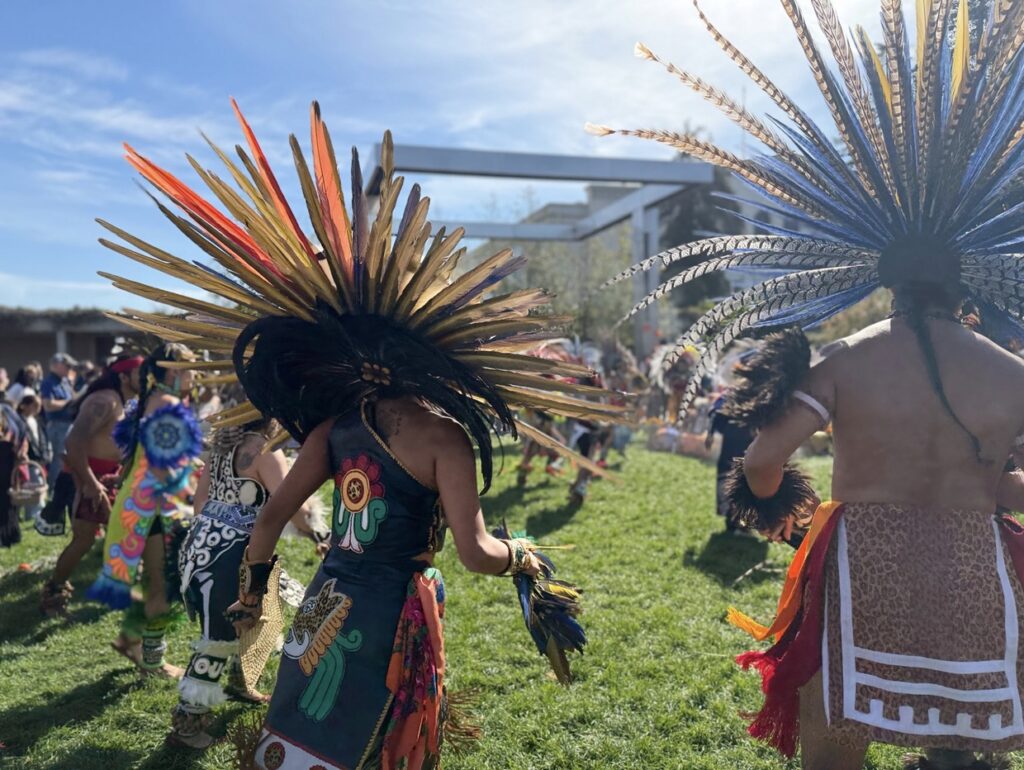
Drums pounded as members of Danza Xitlalli, an Aztec dance group, circled the lawn of the Oakland Museum of California on Sunday, turning counterclockwise, then clockwise, to open the museum’s annual Día de los Muertos celebration. As the crowd swayed with the dancers, heads tilting as they turned, feet tapping the ground, others put the final touches to their altars, placing candles, marigolds and bundles of sage with the photos of their loved ones and their favorite things.
Día de los Muertos, or Day of the Dead, is a Mexican tradition that is not a day of mourning but as a celebration of loved ones lost. It grew from indigenous rituals that blended with the Catholic observances of All Saints’ Day and All Souls’ Day on Nov. 1 and 2. Many families believe the spirits of the dead return to visit during those days, and welcome them with ofrendas, or altars that include symbols of favorite things.
The OMCA’s celebration, now in its 32nd year, began with an opening ceremony by Danza Xitlalli, and included live music, a cumbia dance lesson, hands-on craft stations for children and colorful altars built by community members to honor the dead.
Each year, the museum invites local organizations and schools to build their own altars for the celebration.
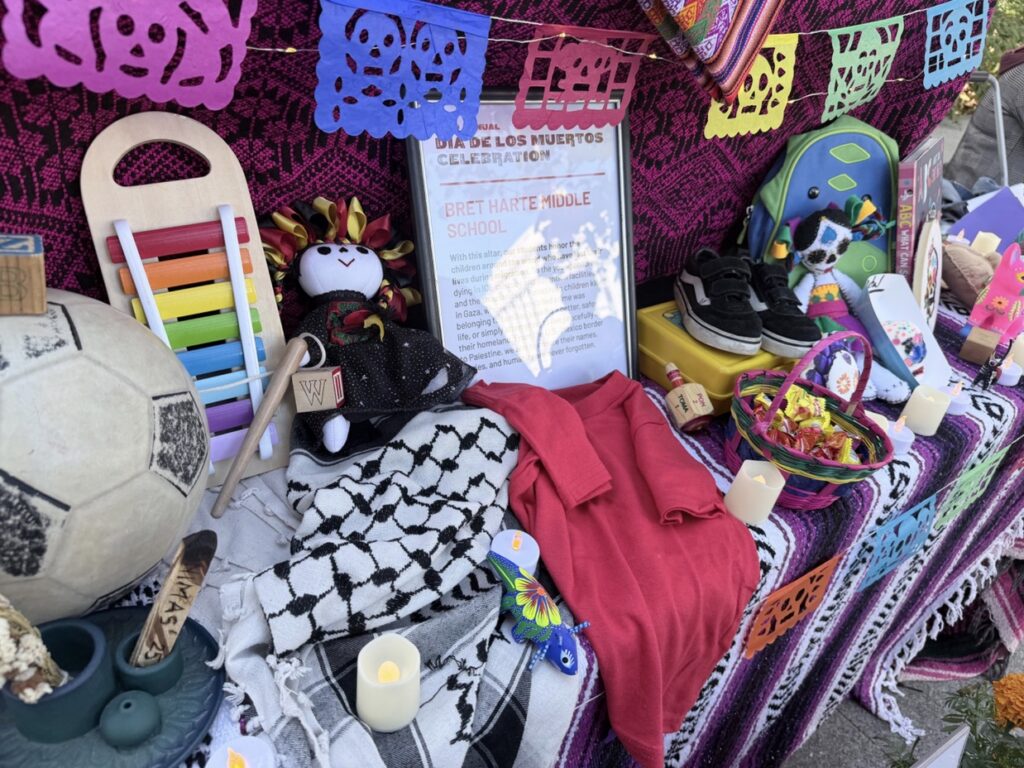
This year, students from Bret Harte Middle School honored children lost to migration and wars around the world. They folded origami butterflies, made paper flowers and created pan dulce out of felt for the altar.
“Just by putting their hands and creating flowers and butterflies and stuff, they’re putting their energy into the altar and their memory,” said Solia Martinez-Jacobs, the school’s librarian, who led the project.
Wilmer Justo, a sixth grader, explained the significance of the butterflies.
“They’re like the signal of migration, and we use them to represent all the children that have been lost migrating,” he said.
Wilmer said he joined the project because of his family’s story. His parents migrated from Mexico, and someone close to them died during the journey.
“I felt bad for them,” he said.
As students worked, they talked about how they are safe at home and how that is not true for every child, Martinez-Jacobs said.
“It was very somber, we don’t know them personally, but we remember them,” she added.
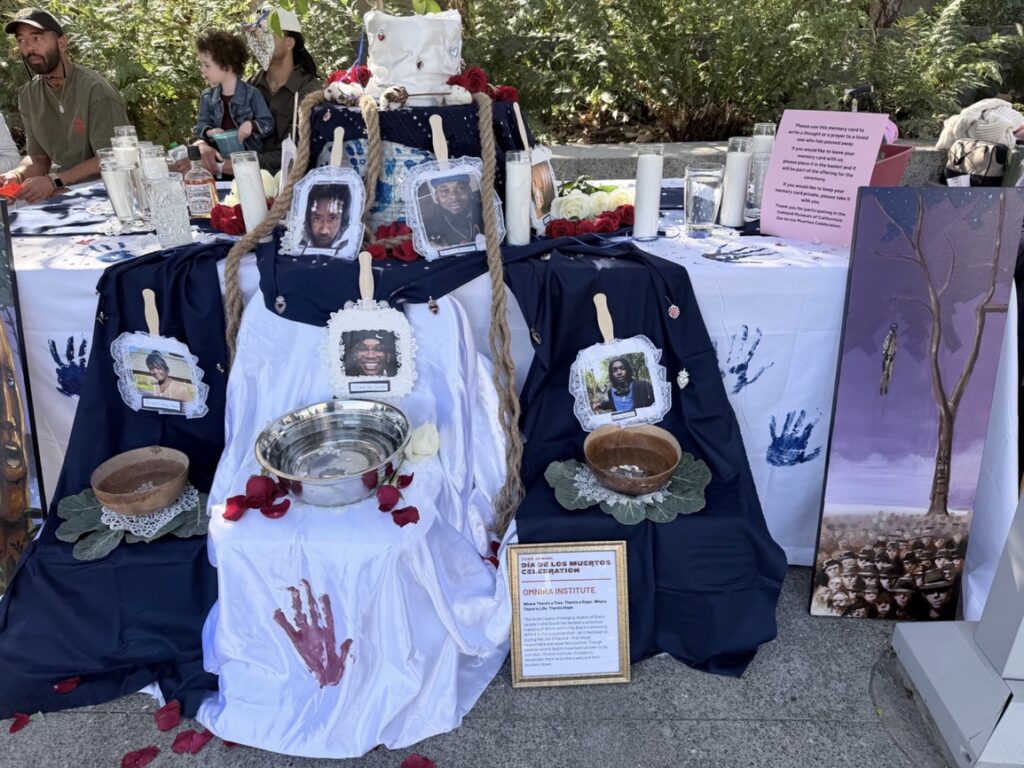
Omnira Institute, which connects African ritual to African American culture, honored Black people who were found hanged in the South in recent years. . A sign next to the altar says that although a half dozen or so deaths from hanging were ruled suicides, the institute chose to remember those people.
The altar is blue and white to also honor those killed during the Transatlantic slave trade, signifying the color of the ocean. Photos of the dead rest on lace doilies, as they once did in many Black homes.
At the center sits a metal pail, to honor the enslaved people who turned washtubs upside down to muffle their voices as they prayed, Wanda Ravernell, executive director of the Omnira Institute, said.
“This bucket also represents a history of prayer,” she said. “We could still mourn them with some deliberateness.”
Micaela Mariscal, co-chair of the museum’s volunteer Día de los Muertos Committee, said he purpose of the altar is to remember loved ones. “That’s the whole thing, that we haven’t forgotten them, and we want to remember them,” she said.
The Día de los Muertos Committee grew out of the Latino Advisory Council, which pushed the museum to collect Latino art and culture, said Triana Patel, manager of learning experience and programming, who oversees the event.
“It was really important for us to make space for our Latino community here in the museum and to celebrate Día de los Muertos,” Patel said. Since Mariscal joined the museum as a volunteer 25 years ago, the celebration has grown and included different communities
“We are much more alike than we’re different,” she said. “If we can embrace each other’s cultures and beliefs, we’re a much stronger community.”
Fruitvale park celebrates Indigenous Peoples’ Day with immersive Ohlone exhibit
Oakland North welcomes comments from our readers, but we ask users to keep all discussion civil and on-topic. Comments post automatically without review from our staff, but we reserve the right to delete material that is libelous, a personal attack, or spam. We request that commenters consistently use the same login name. Comments from the same user posted under multiple aliases may be deleted. Oakland North assumes no liability for comments posted to the site and no endorsement is implied; commenters are solely responsible for their own content.