Riders with disabilities fear bus cuts if Measure RTM fails
on November 1, 2026
To get to San Francisco, artist Jillian Crochet, who is disabled, must plan her route well in advance.
If she takes AC Transit, which requires traveling to and waiting at the bus stop, she must keep an eye out for the weather – Crochet is heat sensitive, and her power wheelchair cannot get wet. On rainy days, she must book a paratransit ride at 5 p.m. the day before. The commute from Oakland takes about two hours, and she fears it could get even longer if a transit funding measure fails on Tuesday.
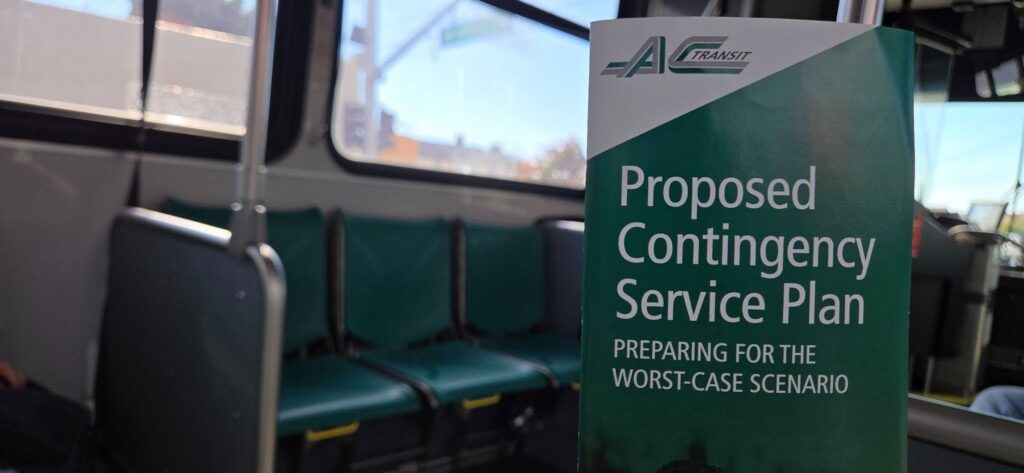
The Regional Transit Measure seeks to address AC Transit’s $200 million budget shortfall. If it fails, AC Transit has proposed a contingency plan that could affect 16% of buses and 1.4% of paratransit trips beginning in June.
“If there is less funding, that means they’ll cut drivers and rides,” Crochet said. “Something that might already take two hours, which is ridiculous, might take three.”
Sheela Gunn, the emergency preparedness coordinator at the Fruitvale Center for Independent Living, said impacts will be exacerbated for people with disabilities if their routes are cut or their bus frequencies change.
“There’s not a second alternative. Not everybody can afford Lyft, not everybody can afford Uber,” said Gunn, who is blind. “That means they’re stuck at work or at home or at the doctor’s, and they can’t get back to home.”
About 7% of riders who took AC Transit’s 2025-2026 Rider Profile Survey said they have a disability, and about half of those respondents have mobility issues.
East Bay Paratransit is a door-to-door service for people with disabilities that extends three quarters of a mile from main bus routes. The service was established by AC Transit and BART to comply with the Americans with Disabilities Act, which became law in 1990.

Robert Lyles, an AC Transit spokesperson, offered a snapshot of ridership, saying about 4,100 riders took paratransit between September and November 2025. Lyles said roughly 98% of paratransit trips and 96% of riders would not be affected by cuts proposed in the contingency plan. The plan, he said, is a “worst-case scenario.”
The Oct. 14 AC Transit Board meeting served as a community hearing for the contingency plan. Many speakers pointed out the plan would negatively affect seniors and people with disabilities.
Some lines such as the F bus from Downtown Berkeley to the Salesforce Transit Center in San Francisco, will have no weekend service, and others such as the 12, which connects Berkeley’s Gilman District to Oakland Amtrak, may end at 10 p.m.
“There’s probably high schoolers with curfews later than that,” Crochet said.
Cuts would increase traffic
Groups campaigning against the bill say the transit companies don’t have to resort to reducing service, but can save money by trimming “wasteful spending.” Voting no, says the argument by taxpayer groups in the Alameda County Voter Information Guide, means “transit agencies must correct their history of mismanagement.”
Proponents of the measure say if service is reduced, it won’t just affect public transit riders, but everyone on the road.
The San Francisco Bay Area Planning and Urban Research Association released its “Bumper to Bumper” traffic analysis in late September, showing traffic congestion could increase if the cuts go into effect. For example, the Bay Bridge could experience increased traffic delays of up to 33 minutes during morning peak hours and 43 minutes in the evening. For both disabled and able-bodied individuals, unpredictable transportation and ride times will make it more difficult to schedule and attend social events, appointments and work.
“Transit in Oakland is an essential lifeline to so many people,” said Carter Lavin, climate activist at the Transbay Coalition. “We have students, we have retirees, we have professionals, we have families with babies, we have all sorts of folks on it.”
The coalition has focused on organizing, phone banking and going door-to-door to raise awareness about the transit measure. Lavin does not believe the contingency plan or other substitutes would sufficiently serve Bay Area riders.
Crochet occasionally relies on a pilot program called Onward that provides same-day wheelchair-accessible transport for certain riders across the Bay Area. The program is funded through the end of the year.
“If we don’t have Onward next year, and then they cut bus and BART, we’re going to be so screwed,” Crochet said. “It’s going to require so much more time and so much more energy to navigate, and also just limit our ability to be autonomous human beings.”
(Top photo of a sign on an AC Transit bus, by Nichelle Wong)
Union representing city technical workers plans one-day strike
Oakland North welcomes comments from our readers, but we ask users to keep all discussion civil and on-topic. Comments post automatically without review from our staff, but we reserve the right to delete material that is libelous, a personal attack, or spam. We request that commenters consistently use the same login name. Comments from the same user posted under multiple aliases may be deleted. Oakland North assumes no liability for comments posted to the site and no endorsement is implied; commenters are solely responsible for their own content.