Flock cameras roll even though Oakland has yet to sign contract approved in December to protect motorists’ data
on November 13, 2026
Nearly a year after Oakland City Council approved a $2.25 million contract with Flock Safety for automatic license plate reader cameras, no contract has been signed and city and company officials are not saying why.
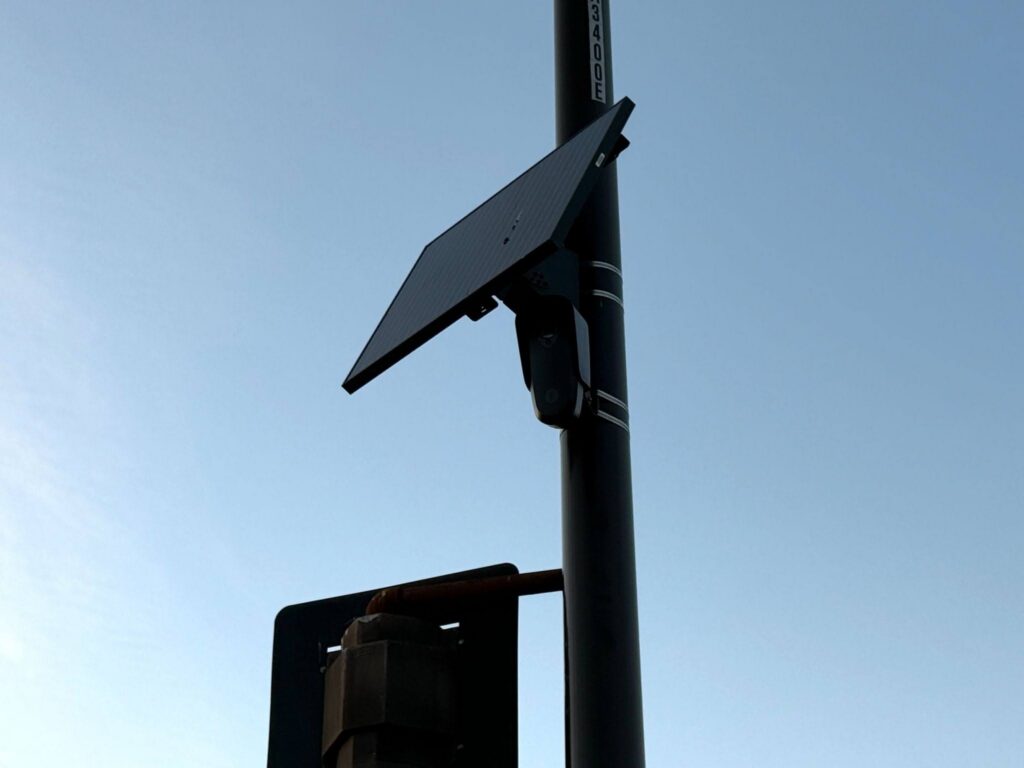
Oakland’s Flock Safety cameras are operational and capture over 1.5 million images of plates per month, Flock data show.
The mayor’s office and city administration referred inquiries about the status of the contract to the Oakland Police Department.
The Police Department referred inquiries to the city attorney’s office.
Nina Erlich-Williams, spokesperson for City Attorney Ryan Richardson said the office had no comment but would share more information once the contract was signed.
Paris Lewbel, a Flock Safety spokesperson, said on Oct. 24 that conversations with the city are ongoing. Lewbel noted there has been some “back and forth” over the contract but offered no further clarification.
No contract, no audit
The two year contract includes an amendment by Councilmember Charlene Wang that outlines safeguards to protect Oakland data from potential misuse, including restrictions on sharing it with U.S. Immigration and Customs Enforcement or with police departments that share information with ICE.
The contract also says Flock could be financially penalized or the agreement terminated if the company shares Oakland data with entities that violate the city’s sanctuary city ordinance. The city auditor is required to run audits of the system every six months to ensure compliance with the safeguards outlined in the contract. But that hasn’t been done, City Auditor Michael C. Houston said last month, because there is no contract.
Oakland’s 293 Flock cameras have been in operation since April 2024, when the cameras were provided to Oakland and funded by the California Highway Patrol. The contract passed in December would expand the network and have the city take over responsibility and payment for the cameras.
While the contract remains unsigned, it’s unclear if the guardrails written into it are enforceable.
Flock has highlighted Oakland as an example of how a city can institute safeguards around use of the technology. Flock cameras capture images of license plates and use proprietary technology to turn the images into searchable text. Data can be stored for up to 30 days according to California law.
Houston told City Council on Oct. 6 that his office started the required audit, then pushed it back until after the contract has been signed.
Wang, who supports Oakland’s use of the controversial cameras, initiated the exchange with Houston, saying there was “high interest from the general public” on the audit.
In a follow-up conversation with Oakland North, Michael Wimsatt, Wang’s chief of staff, said the audit is an “ongoing priority” for the auditor’s office. He said Richardson assured Wang’s office that Oakland’s sanctuary city ordinance governs any use of Flock or other systems.
City Council strengthened the ordinance this summer, with provisions prohibiting the city from contracting with firms that provide “services or goods for data collection or immigration detention facilities” to a host of federal agencies, including ICE and the Department of Homeland Security.
Asked if the guardrails were enforceable without the Flock contract being signed, the city attorney’s office pointed to Wang’s amendments and had no additional comment.
Houston did not respond to repeated attempts to get clarity on the status of the audit.
Councilmember Carroll Fife who cast the only vote against the Flock contract in December, told Oakland North after the Oct. 6 meeting that she was “surprised” and “disturbed” upon learning it had not been signed, noting that much attention had been given to getting the contract to a vote but less on determining if its guardrails were “actionable and enforceable.”
Demystifying plug-in solar devices, which are now legal and can save Oaklanders money

Oakland North welcomes comments from our readers, but we ask users to keep all discussion civil and on-topic. Comments post automatically without review from our staff, but we reserve the right to delete material that is libelous, a personal attack, or spam. We request that commenters consistently use the same login name. Comments from the same user posted under multiple aliases may be deleted. Oakland North assumes no liability for comments posted to the site and no endorsement is implied; commenters are solely responsible for their own content.